Showing posts with label dark. Show all posts

Friday, February 20, 2015

Crime and Punishment in a Nutshell

Although I read Crime and Punishment a few years ago and like it well enough, here's a hilariously snarky review  boiled down to eight key elements.

It is possible, though, to read this weighty tome for no other reason than to enjoy some international time travel of the armchair variety, with excitement and drama provided by unseemly characters in thorny situations. The Russian authors of old are quite accommodating in this regard.


Friday, March 21, 2014

Child of God by Cormac McCarthy

Oh golly. Not for the faint of heart or squeamish, this one. As much as I love all things McCarthy, dark as they often are, Child of God will not go down as one of my favorites. The writing, of course, kept me glued to the page, and the story did have elements of his later book Sutree, a book I loved, but the scant 200 large-type, short-chapter pages felt more like a Hitchcock or Poe horror story of the kind I read as a teenager at Halloween than anything I would devote energy to absorbing now. As with most McCarthy books I'm sure there is a lot going on under the very weird surface here, but it was all to short and undeveloped for me to find.


(back cover)
Falsely accused of rape, Lester Ballard - a violent, dispossessed man who haunts the hill country of East Tennessee - is released from jail and allowed to roam at will, preying on the population with his strange lusts. His everyday actions are transformed into stunning scenes of the comic and the grotesque. And as the story hurtles toward its unforgettable conclusion, McCarthy depicts the most sordid aspects of life with dignity, humor, and characteristic lyrical brilliance. 

Monday, January 20, 2014

Gone Girl by Gillian Flynn

This book is . . . I can't even . . . what on earth? . . . holy crap.

I haven't been this wowed by a contemporary book since, oh I don't know, ever? It had me absolutely gripped from the opening credits -I listened on audio, all 15 disks- until the very last passage. It was just bad timing that I started it before the holidays when I had to take long breaks to attend to domestic obligations, power outages, ice storms and polar vortexes. I was stranded, I tell you. Stranded. A piece of advice? Clear your calendar for this one. Set in supplies and take the phone off the hook because Gone Girl is unputdownable.

What's it about? It's about a guy looking for his missing wife. It's a psychological thriller. I can't say more or I might give something away. And really, it's best read without expectations or assumptions. There. That's all I'm going to say. Get your hands on a copy to read or listen to before the movie comes out in October. Apparently they've rewritten the ending for the movie...? Hmm. Curious. I thought the ending of the book would be perfectly serviceable on the screen. Whatever. With the cast they've got lined up, I'm sure it will be splendid.

As good as it is, though, I have some questions about what appear to be holes in the plot. Not many. One or two. The overall story is so gripping, so good, that I'm willing to let a couple things go. But still. Anyone else? I don't want to get into specifics here because that would be spoiler-y, but perhaps email to discuss . . .

Wednesday, January 15, 2014

The Museum of Extraordinary Things by Alice Hoffman

Here's an author I can always count on to take me away to other times in history. In Alice Hoffman's latest book, The Museum of Extraordinary Things, the reader is transported to 1911 Manhattan and the attractions at Coney Island. With all the rapid social and industrial changes in North America, early 1900s is one is one of the most interesting eras to read about. And what Alice Hoffman does so well (as she also did with The Dovekeepers) is to set her narrative to the backdrop of actual places and historical events, in this case the Triangle Shirtwaist Factory fire and the Coney Island Dreamland fire, two tragedies that frame the story of Coralie Sardie and Eddie Cohen.

Coralie was born with deformed, webbed hands and has been her father, professor Sardie's, freak show project her entire life. He is the owner and curator of a Coney Island boardwalk attraction called the Museum of Extraordinary Things where he houses and displays various  animal and human curiosities from around the world, many of which are Coralie's only friends. The professor builds a large tank and fashions a 'fishtail' for Coralie's lower body to display her as a mermaid. He also pushes her to practice holding her breath and to swim the icy waters of the Hudson river in all weather, an activity she comes to enjoy for the solitude it affords her. Coralie's life is very much prescribed, exploited and hidden but she gains a sense of the world outside her father's grasp, from books and stories brought in to the museum by the other performers and employees, and from Eddie, the mysterious young photographer she spies on the banks of the Hudson.

Eddie Cohen's narrative alternates with Coralie's beginning with a seemingly unrelated event. He takes photos of the devastation at the Triangle Shirtwaist Factory after a fire on the 8th, 9th, and 10th floors kills 146 mostly immigrant women and girls, many of them jumping to their deaths on the street below. One of the girls is not accounted for and Eddie believes he might be able to find out what happened, for he too has spied a mystery on the Hudson.

Part history, part murder mystery, part love story, The Museum of Extraordinary Things is all Alice Hoffman. The only issue I have is not so much in the alternating viewpoints (a former peeve of mine that I have come to accept and even appreciate when the writing is good) but in the alternating perspectives between the chapters as well. Some are written in first-person, others in third. I found it a disorienting way to absorb the story. However, the writing is lovely, the characters are well developed and the attention to place and detail is spot-on. Hoffman addresses the harsh realities of life for young people and immigrants, factory workers and circus performers early in the last century. I think fans will recognize and enjoy the human touch Hoffman so often brings to her works of historical fiction.


Saturday, October 19, 2013

Bellman and Black by Diane Setterfield

Bellman and Black by Diane Setterfield is the long awaited book from the the author who gave us the amazingly atmospheric and thoroughly enjoyable The Thirteenth Tale seven years ago. Like Thirteenth Tale, Bellman and Black is about family and memory and coming to terms with the past; the writing, too, is lovely but flows a bit differently than what I had come to expect from her previous book. Although there are some creepy descriptions in keeping with the dark, Victorian setting, there are also long, detailed passages about the workings of textile mills and setting up of retail businesses interspersed with short, almost sketch-like references to many of the characters (except for Seamstress #9 who was quite extensively portrayed.) It all took a bit of getting used to.
There are, however, interesting asides throughout the book about the crow-like rooks, which, along with being the type of bird William killed as a child, also make regular appearances in the background of William's growing up and into his adult life. The rooks are there and they, as well as this mysterious stranger named Black, seem to be watching him as he tries ever harder to keep ahead of the deaths that are happening all around him. His determination to keep his remaining daughter safe and alive starts morphing into a self-destructive obsession with work and business and bargaining, the conclusion of which reminds me of the fable in Harry Chapin's song  Cats in the Cradle.

An okay read, yes, but not quite as solid as I had been hoping.

Caught up in a moment of boyhood competition, William Bellman recklessly aims his slingshot at a rook resting on a branch, killing the bird instantly. It is a small but cruel act, and is soon forgotten. By the time he is grown, with a wife and children of his own, William seems to have put the whole incident behind him. It was as if he never killed the thing at all. But rooks don't forget…
Years later, when a stranger mysteriously enters William's life his fortunes begin to turn - and the terrible and unforeseen consequences of his past indiscretion take root. In a desperate bid to save the only precious thing he has left, he enters into a rather strange bargain, with an even stranger partner. Together, they found a decidedly macabre business. And Bellman and Black is born. (back cover)

He felt something move in his chest, as though an organ had been removed and something unfamiliar inserted in its place. A sentiment he had never suspected the existence of bloomed within him. It traveled from his chest along the veins to every limb. It swelled in his head, muffled his ears, stilled his voice and collected in his feet and fingers. Having no word for it, he remained silent, but felt it root, become permanent. pg5

His happiness and his success, that he had taken to be solid things, hewn out of his own effort and talent, had proved as fragile as the seed head of dandilions; all it took was for this unsuspecting competitor to release his breath and the clockhead disappeared. Why, he wondered, had he never known? He, who knew everything? What had kept him in ignorance all these years? pg127

Saturday, September 14, 2013

The Light in August by William Faulkner

Oh brother. I am trying to appreciate this author's legendary artistry but I just don't get why he has to be so repetitive and obtuse. Different POVs abound and the characters' stories get retold from all the different perspectives. Some characters 'disappear' for a while and then return, meanwhile new characters are randomly introduced well into the story to take over the narrative. Wait. What? Who? Where did he come from? I'm confused. Although I welcome the challenge of difficult literature, this stylistic approach to writing a story seems deliberately obfuscating. Light in August might be a little more 'normal' than Sound and Fury, but it's still pretty weird.

I have As I Lay Dying and Sanctuary on my TBR shelf but whether or not I have the resolve to read them remains to be seen.


Light in August, a novel about hopeful perseverance in the face of mortality, features some of Faulkner's most memorable characters: guileless Lena Grove, in search of the father of her unborn child; Reverend Gail Hightower, who is plagued by visions of Confederate horsemen; and Joe Christmas, a desperate, enigmatic drifter consumed by his mixed ancestry. (back cover)

Wednesday, June 26, 2013

The Casual Vacancy by J. K. Rowling

This is going to be more of a gush than a review. I absolutely loved everything about this book. Loved it. I know next to nothing about the Harry Potter stories, or even about the author, so I really went into this as somewhat of a JK neophyte. I had no expectations other than what I could glean from the cover, which I thought looked bright and whimsical; I couldn't have been more wrong. The story is a gritty social commentary with a smattering of dark humour. It has many characters and a complex assortment of relationships, as one has when living in a close-knit community. Everyone knows everyone else to some degree, be it teacher/student, doctor/patient, employer/employee, parent/child, school friends, coach, neighbour, social worker, lawyer, town councillor etc.

See?

image source

There are enough relationships and personal histories here to make Tolstoy proud. I would even go so far as to say this story reminds me remarkably of Anna Karenina, with tragic heroine and dysfunctional families and all. It was that good.

It pained me to read all the tepid reviews; I can't think of a reason for them other than the fact that Harry Potter is an impossible act to follow, so of course any subsequent books JK writes are going to be 'flops'. She has nerves of steel to even attempt it.

Some of the complaints I've heard are that most of the characters are not particularly 'likeable', whatever that means. Quirky, different and flawed is how I find them, and isn't that what makes a story compelling? I'd rather read about villains and underdogs than people who are 'nice'. The various themes (addictions, OCD, poverty) are said to be too bleak leaving the reader with a sense of hopelessness at the end. Ehn. I don't know. It's social commentary. It's ongoing. It's challenging, yes; it shook me up quite a bit but I didn't find it hopeless. In fact I have huge respect for JK for delving into such issues with the depth and compassion which she did. I found her portrayal of the subjects remarkably sensitive.

Part of my affinity for this book could also be that I listened to it on audio with Tom Hollander doing a fantastic job reading all the parts. His inflections, accents and timing are bang-on and has me searching the internet for any other audiobooks he's narrated (A Clockwork Orange!). I want them all. And as for JK? I don't think I could hold a contemporary author in higher esteem.

Anywhoo, *highfive* Ms. Rowling and Mr. Hollander - you guys rock.

A Big Novel ABout a Small Town . . . 

When Barry Fairbrother dies in his early forties, the town of Pagford is left in shock. Pagford is, seemingly, an English idyll, with a cobbled market square and an ancient abbey, but what lies behind the pretty facade is a town at war. Rich at war with poor, teenagers at war with their parents, wives at war with their husbands, teachers at war with their pupils…Pagford is not what it first seems.
And the empty seat left by Barry on the parish council soon becomes the catalyst for the biggest war the town has yet seen. Who will triumph in an election fraught with passion, duplicity, and unexpected revelations. (back cover)

Friday, June 7, 2013

Inferno by Dan Brown

I have to say I was torn about what to think of this one. I always enjoy the history lessons in these Robert Langdon stories, and the deciphering of ancient symbols, but I found the plot twists somewhat contrived and didn't really appreciate all the endless action/escape/chase sequences as they just slow the progress of the story. I've read all of his books now and don't remember them being quite as formulaic as this one. It could also just be me. I used to read all the Robin Cook books years ago, until I couldn't any more. I think I've hit the wall with Dan Brown now too.

3 out of 5 stars

Tuesday, January 29, 2013

The Winter Ghosts by Kate Mosse

My TBR pile has been taking a beating lately and I couldn't be more pleased! Some of these titles have been staring at me for years. The Winter Ghosts by Kate Mosse for example. It's a small, short book, more of a novella, really. But look how atmospheric the description on the back sounds:

It's 1928. Freddie Watson is still grieving for his brother, lost in the Great War. Driving through the foothills of the French Pyrenees, his car spins off the road in a snowstorm. Freddie takes refuge in an isolated village and there meets a beautiful, captivating woman. They spend the night talking of love and loss and war. But by daybreak, Fabrissa has vanished and Freddie realizes he holds the key to an ancient mystery that leads him deep into the mountains, to a cave that has concealed an appalling secret for 700 years. (back cover)

Cool, yes? I was never really sure, though, if I would like this author enough to give her another try, as I had abandoned her earlier book Labyrinth a few years ago. But with the cold and dark weather we've been having around here I figured the conditions were right to take this book off the shelf and go from there. It was, happily, surprisingly, good. Well, not 'happily' I guess, as it is a rather sad story, but it was wonderfully atmospheric in a way I was exactly in the mood for. It even takes place at a time in history I'm quite interested in, and has a decently satisfying conclusion.

There is a downside, though, and this might be very nit-picky of me as it is one of my pet literary peeves, but her prolific use of metaphors and similes gets on my nerves. Authors who feel the need to describe candlelight as 'dancing' tend to get blacklisted pretty quickly in my books. She uses 'dancing' a number of times to describe snowflakes and dust motes, too. And then there are several references to Fabrissa's 'clever grey eyes'. I don't know. The word 'clever' in reference to eyes seems a bit overwrought. It all reminded me of why I DNFed Labyrinth, a much longer and more involved book; there are only so many contrived descriptions I can tolerate. Poetry is one thing, but a novel is better served by writing that is tight and concise.

So. If you can get past the various poetic flourishes, The Winter Ghosts is a good, fast-paced, cold weather read.

Wednesday, October 31, 2012

The Devil in The White City by Erik Larson

Oh man, CREEPY! And interesting. I listened to this as an audiobook while out on my early morning walks . . . in the misty dawn . . . with leaves crunching under foot . . . bare trees . . . the moon.

Okay, so. The Devil in the White City by Erik Larson is actually two parallel stories: One being the building of the World's Columbian Exposition in Chicago in the 1890s, an endeavour of truly astronomical proportions. The other being that of serial killer Dr. Henry H. Holmes who preyed on trusting young travellers (mostly women) coming to Chicago for the fair. He built a nearby 'hotel' with businesses on the ground floor and rooms above as a façade for what can only be referred to as a house of horrors.

Normally I don't go for cheesy, gross-out movies like 'Hostel', but this, as a non-fiction book with some context, intrigue and insight, is a vastly more interesting story. It has a solid creep factor without all the gory in-your-face details. My imagination takes care of that just fine, thanks. Word on the street is that Leonardo diCaprio just bought the movie rights . . . Hmm, we'll see where he goes with this one.

Happy Halloween!


image source

Thursday, October 4, 2012

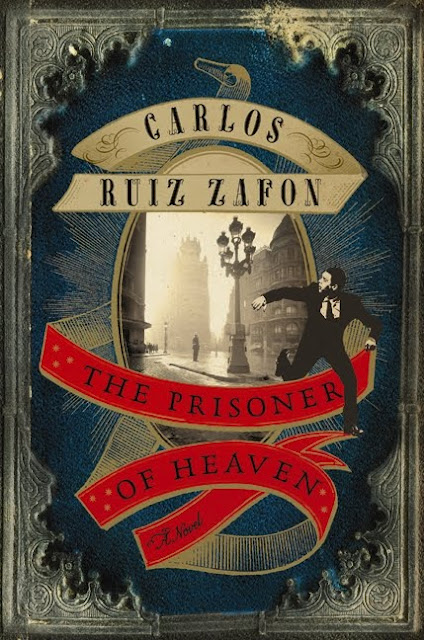
The Prisoner of Heaven by Carlos Ruiz Zafon

Lame 'review' ahead . . .

What can I say? I just love these books. By 'these' I mean the two previous ones in this trilogy The Shadow of the Wind and The Angel's Game both and now this third one The Prisoner of Heaven. the cool thing is they are so intertwined that you don't even really need to read them in order. This one, again, takes us to Barcelona in the 1950s centered on the bookstore of Sempere and Son with Daniel, his father and his wife Bea, his friend Fermin, and a whole host of other characters readers of his previous books will recognize including the Cemetery of Forgotten Books. I'm sorry I don't have any quotes for this one but I listened to it as an audiobook, which in hindsight probably wasn't the best thing to do, especially since my audiobook listening happens right after I wake up at 5:30am.  I don't have the level of detail retention needed for solving mysteries, murders and crimes, and without having actual pages to reread I'm afraid I missed out on some of the twists. It still makes for a very cool and atmospheric story, though. Just don't hold me to the finer details. I'd never make it as a detective, that's for sure.

Saturday, September 29, 2012

The New Life by Orhan Pamuk DNF

A book about the transformative power of books sounds heavenly, right? But holy cow, this author waxes obsessive over this one unnamed book that has a surreal and trippy hold over his characters. Once 'the book' has been read, our protagonist, Osman, goes on and on and ON about how life-changing this book is. To the point of leaving his life as a university student in Istanbul and joining his new girlfriend Janan (also obsessed with 'the book') on a quest to find this New Life as promised by 'the book.' They spend months traveling by bus sometimes having the misfortune of being involved in explosive bus accidents (remind never to travel by bus in Turkey). They steal money and identities from the dead passengers and then carry on their journey looking for this 'new life' that they know is out there waiting for them. There's also something about Janan's former boyfriend Mehmet (also a reader of 'the book') whom they're trying to track down. He survived being shot and is in hiding. How does it all end? It's twisty, weird, strangely engaging and . . . I didn't finish it. It's not that it isn't good, per se, it's just that for me, right now, it's a little too heavy on the magic realism. I'll hang on to it for another time.

I read a book one day and my whole life was changed. Even on the first page I was so affected by the book's intensity I felt my body sever itself and pull away from the chair where I sat reading the book that lay before me on the table. But even though I felt my body dissociating, my entire being remained so concertedly at the table that the book its influence not only on my soul but on every aspect of my identity. (opening paragraph)

It was just a pocket watch, but one sensitive to bliss; it stopped when you were happy so that your blissful hour could persist for all eternity; and conversely, when you were in despair , the small and big hand speeded up tremendously, making you remark how quickly time had passed and how your sorrows had ended in the blink of an eye. pg92

The mother of the three rosy daughters was a small woman who practiced emotional extortion; not only her eyes but her whole demeanor said: Watch it, should you displease me, I shall burst into tears. pg111

I kept thinking of Janan. I was tuned to her like a television set constantly on the same channel, but now I was thinking of her sitting in a different kind of chair, perhaps because I was seeing myself in a different light. pg125

Thin, fragile lightening bolts were flashing back and forth in the clouds when Doctor Fine repeated once more that what had turned his son against him had been a book. His son had read a book one day and thought his whole world had changed. pg129

The culprit is not only that particular book, the book that snared my son, but all the books that have been printed by printing presses; they are all enemies of the annals of our time, our former existence. pg131

Sunday, September 9, 2012

The Sisters Brothers by Patrick DeWitt

I picked this up as an audiobook from the library not really sure what to expect only knowing it was nominated for the 2011 Booker Prize. Although I'm not a huge fan of Westerns, I do like them occasionally but am only familiar with Cormac McCarthy, whose books I love. Patrick deWitt's The Sisiters Brothers is similar in style and scope with the added benefit of a smattering of dark humor. The publisher's description, though, claims that it is a 'comic tour de force', which I think might be a little overstated. It is more about adventure and quirky characters than it is about humor. But I did enjoyed it enough to wonder what the author will be working on in the future.

Herman Kermit Warm is going to die. The enigmatic and powerful man known only as the Commodore has ordered it, and his henchmen, Eli and Charlie Sisters, will make sure of it. Though Eli doesn't share his brother's appetite for whiskey and killing, he's never known anything else. But their prey isn't an easy mark, and on the road from Oregon City to Warm's gold-mining claim outside Sacramento, Eli begins to question what he does for a living - and whom he does it for.

With The Sisters Brothers, Patrick deWitt pays homage to the classic Western, transforming it into an unforgettable comic tour de force. Filled with a remarkable cast of characters - losers, cheaters, and ne'er-do-wells from all stripes of life - and told by a complex and compelling narrator, it is a violent, lustful odyssey through the underworld of the 1850s frontier that beautifully captures the humor, melancholy, and grit of the Old West and two brothers bound by blood, violence, and love. (HarperCollins)

Tuesday, September 4, 2012

Before I Go To Sleep by S. J. Watson

Oh brother. I had problems with this story.

I'll tell you what I did like, though. There was a high level of tension and suspense from page one which had me reading and reading until the wee hours and hardly able to go to sleep myself. I love that, for the most part. The problem with this level of tension, though, is it better resolve in a timely manner and it better resolve in a satisfactory way or I'm going to be pissed. It's a case of The-higher-you-climb-the-harder-you-fall, ya know? I'm a tough audience, but whatever.

I do like a good psychological thriller of the Shutter Island kind, so I kept looking for clues and rereading passages hoping for that ah-ha moment. But when it finally came *spoilers* it was just too, WTF? That can't possibly have happened! Where were this woman's extended family? Parent's? Siblings? Cousins? Anybody who would have had some interest in her long term well being. I could (kind of) understand the hub wanting to take a break, but to TOTALLY ABANDON your brain damaged wife and mother of your son to an institution seems kind of low. Regardless of the affair she had been having, she's still your wife and you still love her so . . . you go to Italy? And the grown son decides it's best if he stops visiting his institutionalized mother too? For her own good 'because it upsets her too much'? No. I'm sorry, but I don't buy it. If it wasn't going to be either her sorry husband or son who cared enough, somebody out there needed to be informed that she was being released from the institution into the care of an abusive nutcase CLAIMING to be her 'husband'. And don't give me the 'high-staff-turnover-at-the-hospital' excuse for letting this happen. Details, you see. Details. I like them to be plausible.

Also, the tension. It went on too long. Unlike Shutter Island and A Beautiful Mind, which you think is one story and then it turns out to be another, a psychological turn of events that tickles my neurons in just the right way, Before I Go To Sleep lets you know that something is not right as soon as you start reading and then keeps ramping up the uh-oh factor. It's exciting at first but gets exhausting by the halfway point. It's an okay book that would have read better as a short story, I think.

3/5 stars

Tuesday, June 12, 2012

Slammerkin by Emma Donoghue

Not for the faint of heart, this book is fast-paced, gripping, and quite sad. But I guess the life of a teenage prostitute wouldn't be anything else. I had no idea this was based on a true story! I'm already a fan of historical fiction, but knowing these were actual people and actual events heightened the emotion and made it much more compelling and interesting to read.

Mary Saunders came from a broken, working-class background and was kicked out of the house at thirteen for becoming pregnant. The pregnancy, of course, was not her wish or fault but the result of her naturally immature judgment; she wanted a red ribbon but didn't have enough money to pay for it, so the seller suggested she offer herself instead . . . There's a reason it's called statutory rape in today's world.

And thus begins her slide into self destruction as so often follows abuse and abandonment. The street smarts needed to survive become quickly ingrained at such a young age and hard to shake, even when circumstances improve. In Mary's case, she tries, and succeeds, for a time anyway, to work as a seamstress's apprentice in a small town far away from the streets of London. Things seem to be going well until her old survival instincts and habits resurface. A rash decision leads to a snap judgment, which then leads to less than wise actions and then to the collapse of her carefully constructed safety net. She couldn't win for losing.

On a side note, this book strikes a personal nerve for me. I used to volunteer at a group home for homeless teenage mothers and would see this cycle of self-sabotaging behavior over and over again. Many of the girls just didn't really believe they could make it. They would try and try and try to better their lives but somehow kept slipping back into old survival habits that had perhaps served them once but were really not healthy or sustainable or appropriate anymore. It was heartbreaking to watch them come so close to success only to have it dissolve at their fingertips. There were a good number of successes, though, too. Girls who went on to finish their education, get jobs and support themselves and their babies were so inspiring. Overcoming the cycle of abuse and abandonment is an incredible feat for someone only on the planet for less than twenty years.

Anyway, enough rambling. It's a good book and well worth a read.

Mary remains true only to the three rules she learned on the streets of London: Never give up your liberty. Clothes make the woman. Clothes are the greatest lie ever told. (inside flap)


Those stony eyes softened a little. The Matron pulled her chair nearer and leaned over her desk. 'Mary,' she murmured as if imparting a secret. 'I know you to be a young woman of great capacities. Your education is solid, your wits are original, and your will is strong. In less than two months, with my own eyes I have seen you blossom into a seamstress of remarkable skill. But still a shadow hangs over you. pg91


The girl remembered London as a place of infinite freedom. Now it seemed she'd rented out her whole life to the Joneses in advance. Service had reduced her to a child, put her under orders to get up and lie down at someone else's whim; her days were spent obeying someone else's rules, working for someone else's profit. Nothing was Mary's anymore. Not even her time was hers to waste. pg163


Something else Mary was learning: what mattered just as much as what someone wore was how they carried it off. The best silk sack gown could be ruined on a stooping, countryish customer. It was all in the gaze, the stance, the set of the shoulders. Mary set herself to learning how to move as if the body - in all its damp indignity - was as sleek and upright as the dress. pg166


Mary didn't know it before, but she was in fact sorry. Strangely sorry for all she was and ever would be, for all she'd done and left undone and never would do. For the way she'd been given a second chance at ordinary life and crushed it underfoot. pg257

Thursday, May 24, 2012

The Serpent's Tale by Ariana Franklin

Another fun (albeit sometimes gruesome) historical, fictional mystery set in medieval England. I listened to this on audio just as I did with the fist book in this series The Mistress of the Art of Death. I was glad to see the same characters here teamed up again to investigate the poisoning of King Henry's favorite mistress Rosamond Clifford. But this story was a little heavier on the politics of the time than Mistress was, which for me isn't as enjoyable. I much prefer to hear about the details of every-day life in the twelfth century than I do about military alliances and whatnot. It was more interesting, instead, to follow Adelia's analytical thinking and common-sense as she used the tools at hand to solve the murders without giving herself away as a doctor, a punishable crime for a woman in her day. That alone makes a great story! Grave Goods is the next book in the series and I'll probably be throwing that on my iPod sometime soon to finish off the trilogy.

In twelfth-century England, Only one woman is trained to uncover the secrets of the dead. The mistress of King Henry II has been poisoned -  and Eleanor of Aquitaine, the king's estranged wife, is the prime suspect. The king must once again summon Adelia Aguilar, mistress of the art of death, to uncover the truth. But more is at stake than just the identity of a killer: civil war threatens to ravage an already war-sick England. Joining forces with her former lover Rowly Picot, Adelia investigates the death as more savage killings ensue. Isolated and trapped by snow and cold, Adelia works feverishly to save innocents and protect the peace. (back cover)

Wednesday, March 21, 2012

The Angel's Game by Carlos Ruiz Zafon

Sinister, dark, and mysterious, The Angel's Game has layers and twists that don't seem like much at first but . . .  More than that I can't say for fear of giving too much away. Read it carefully. Savor it. It's very much like The Shadow of the Wind, only darker and more edge-of-you-seat suspenseful. The Cemetery of Forgotten Books even makes an appearance here, and how cool was that place? I am always so taken by how much Zafon *gets* booklove as both this and Shadow revolve around literature, writers, bookshops, books, mystery and secrets. I don't think I've ever come across so many references to the 'perfume' of paper and ink as I have in these two stories. Both books are hard to put down once you start reading. There's something so captivating about the story, the interesting characters, and the tangible scenery, that it really would be most enjoyable to read in one sitting, a daunting task at 500+ pages, I know. But if at all possible . . .

In an abandoned mansion at the heart of Barcelona, a young man, David Martin, makes his living by writing sensationalist novels under a pseudonym. The survivor of a troubled childhood, he has taken refuge in the world of books and spends his nights spinning baroque tales about the city's underworld. But perhaps his dark imaginings are not as strange as they seem, for in a locked room deep within the house lie photographs and letters hinting at the mysterious death of the previous owner.


Like a slow poison, the history of the place seeps into his bones as he struggles with an impossible love. Close to despair, David receives a letter from a reclusive French editor, Andreas Corelli, who makes him the offer of a lifetime. He is to write a book unlike anything that has ever existed - a book with the power to change minds. In return, he will receive a fortune, and perhaps more. But as David begins the work, he realizes that there is a connection between his haunting book and the shadows that surround his home. (back cover)

I decided that my existence would be one of books and silence. pg 59

Article one: the first time somebody comes here he has the right to choose a book, whichever one he likes,  from all the books there are in this place. Article two: upon adopting a book you undertake to protect it and do all you can to ensure it is never lost. For life. Any questions so far? pg127

It's up to you how you waste your time and money. I'm staying here to read. Life's too short. pg186

Ah, intellectuals. And you wanted me to sign one up. Why is it that the less one has to say the more one says it in the most pompous and pedantic way possible? pg 227

He held the shop door open and showed me in. I stepped into the bookshop and breathed in that perfume of paper and magic that strangely no one had ever thought of bottling. pg318

And yet, as Sempere told me, every book has a soul, the soul of the person who wrote it and the soul of those who read it. pg491

Sunday, February 19, 2012

Fahrenheit 451 by Ray Bradbury

I knew only that Fahrenheit 451, published in 1950, was a story about censorship gone awry (as if there were any other kind) but what I didn't realize until actually reading it was just how prescient so many other details of the story were. 'Ear thimbles' for non-stop music and communicating (earbuds and bluetooth anyone?); 'Wall TVs' for non-stop entertainment with interactive virtual families and live televised police chases (sound familiar?); handheld viewing devices for when you can't attend to your Wall TV (hello ipads and smartphones). And then there's the rampant advertising and the prolific use of medications, all of it to keep everyone from thinking too much, or at all.

Books are a relic from the past thought to be a threat to people's sense of contentment and well-being. Books incite emotions! They create chaos and havoc in an otherwise orderly (i.e. entertained and sedated) society. Anyone found harboring books must be punished and have their collections burned. Indeed some people choose to commit suicide by burning right along with their libraries, an action the government uses to prove just how unhealthy books are to the population. See? Books make people do crazy things.

It took me a long time to get through this because I just don't connect well with fantasy dystopian worlds. But I stuck with it because what I really wanted to know was how the characters and, really, the whole society could justify an existence without books, knowledge or learning. What would that even look like, and were there any successful dissenters? Fahrenheit 451 gives us a small glimpse, and it's creepy.

Guy Montag was a fireman whose job it was to start fires. And he enjoyed his job. He had been a fireman for ten years, and he had never questioned the pleasure of the midnight runs nor the joy of watching pages consumed by flames . . . never questioned anything until he met a seventeen-year-old girl who told him of a past when people were not afraid. Then Guy met a professor who told him of a future in which people could think. And Guy Montag suddenly realized what he had to do . . . (back cover)

"You know, I'm not afraid of you at all." He was surprised. "Why should you be?"
"So many people are. Afraid of firemen, I mean. But you're just a man after all." pg7

"It's fine work. 'Monday burn Milay, Wednesday Whitman, Friday Faulkner, burn 'em to ashes, then burn the ashes'. That's our official slogan." pg8

How rarely did other people's faces take of you and throw back to you your own expression, your own trembling thought? pg11

School is shortened, discipline relaxed, philosophies, histories, languages dropped, English and spelling gradually gradually neglected, finally almost completely ignored. Life is immediate, the job counts, pleasure lies all about after work. Why learn anything save pressing buttons, pulling switches, fitting nuts and bolts? pg55

Faber sniffed the book. "Do  you know that books smell like nutmeg or some spice from a foreign land? I loved to smell them when I was a boy. Lord, there were a lot of lovely books once, before we let them go." pg81

The good writers touch life often. The mediocre ones run a quick hand over her. The bad ones rape her and leave her for the flies. pg83

"Ladies, once a year, every fireman's allowed to bring one book home, from the old days, to show his family how silly it all was, how nervous that sort of thing can make you, how crazy. Guy's surprise tonight is to read you one sample to show how mixed-up things were, so none of us will ever have to bother our little heads about that junk again, isn't that right darling?" pg99

Wednesday, February 8, 2012

Miss Peregrine's Home for Peculiar Children by Ransom Riggs

Although this book deals with the weighty issues of war orphans, its magic and mystery are fun in a Harry Potter sort of way.

A mysterious island. An abandoned orphanage. A strange collection of very curious photographs. It all waits to be discovered in Miss Peregrine's Home For Peculiar Children, an unforgettable novel that mixes fiction and photography in a thrilling reading experience. As our story opens, a horrific family tragedy sets sixteen-year-old Jacob journeying to a remote island off the coast of Wales, where he discovers the crumbling ruins of Miss Peregrines Home For Peculiar Children. As Jacob explores its abandoned bedrooms and hallways, it becomes clear that the children were more than just peculiar. They may have been dangerous. They may have been quarantined on a deserted island for a good reason. And somehow - impossible though it seems - they may still be alive. (shelfari)